Charting peripheral firmware tweaks to align button response curves with player input rhythms in competitive platform battlers
Written by Morgan Beck · Sep 20, 2026
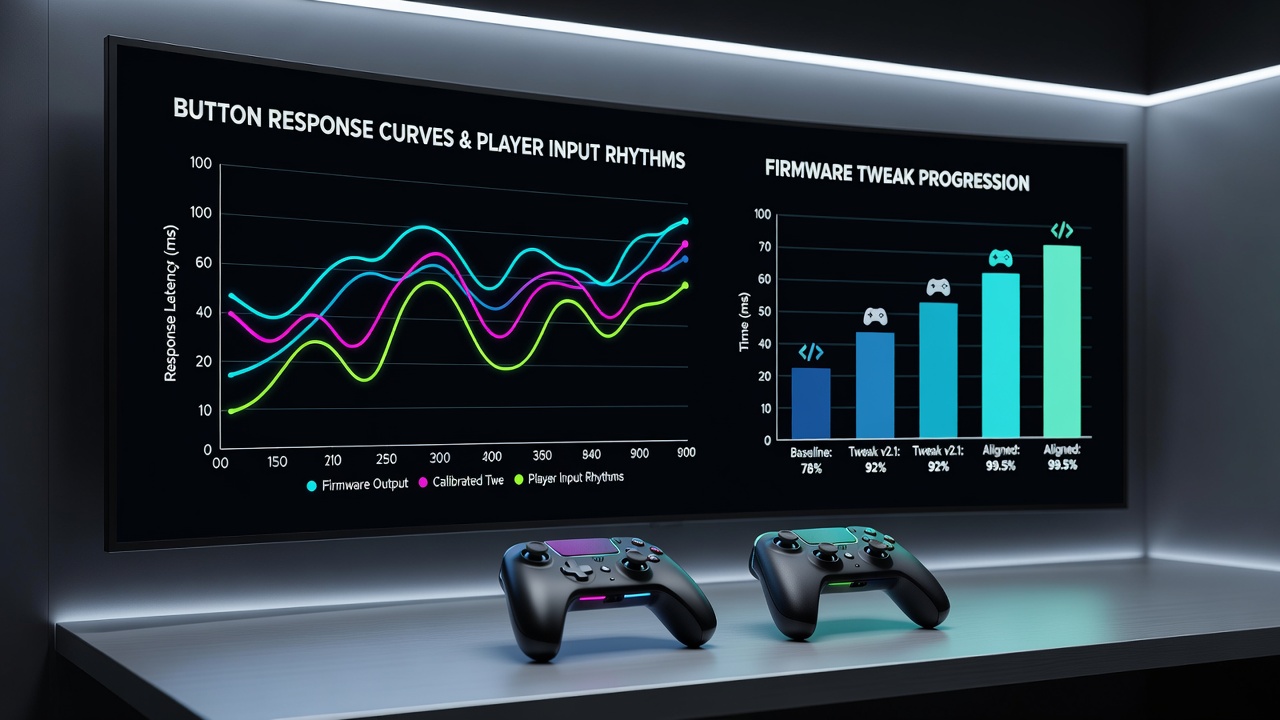
Charting peripheral firmware tweaks to align button response curves with player input rhythms in competitive platform battlers
Peripheral firmware adjustments have become a focal point for those working with controller hardware in competitive platform battlers, where precise timing of button presses determines outcomes in matches that unfold at high speeds. Engineers examine response curves that define how quickly a button registers input after physical contact, and they modify firmware parameters to better match the natural rhythms players develop through repeated practice sessions. These tweaks involve altering debounce timers, adjusting signal thresholds, and recalibrating polling intervals so that each activation aligns more closely with the user's established cadence during combos and recoveries.
Mapping response curves in controller hardware
Button response curves start as linear or exponential functions embedded in the microcontroller code of gamepads and fightsticks, and data from hardware tests shows that standard factory settings often introduce delays ranging from 8 to 15 milliseconds depending on the model. Observers note that players in tournament settings develop consistent input rhythms measured through frame-by-frame analysis of recorded matches, and firmware modifications can shift the activation point along those curves to reduce perceived lag without introducing false positives from accidental touches. Researchers at various institutions have documented how small changes to the hysteresis values in the firmware allow the button to stay responsive across repeated presses at rates exceeding 10 inputs per second.
Techniques for firmware modification
Developers use open-source tools to flash custom firmware onto supported devices, beginning with extraction of the original binary code and followed by targeted edits to timing registers that control debounce periods and release detection windows. One group of hardware specialists found that extending the release threshold by two milliseconds helped synchronize button behavior with players who favor slightly delayed follow-up inputs during aerial sequences in platform battlers. These changes remain reversible through backup restoration, and community repositories track version histories so that competitors can test multiple configurations against their personal input patterns recorded during training.
Integration with player-specific rhythms
Analysis of input logs from high-level events reveals that successful players exhibit unique timing signatures, such as clustered presses separated by fixed intervals that reflect muscle memory built over thousands of matches. Firmware tweaks target these signatures by shifting the peak sensitivity region of the response curve to overlap with the player's average press duration, which studies indicate can improve registration accuracy by measurable margins when tested under controlled conditions. Equipment from different manufacturers responds differently to the same parameter changes, prompting users to maintain separate profiles for each peripheral they employ across regional circuits.
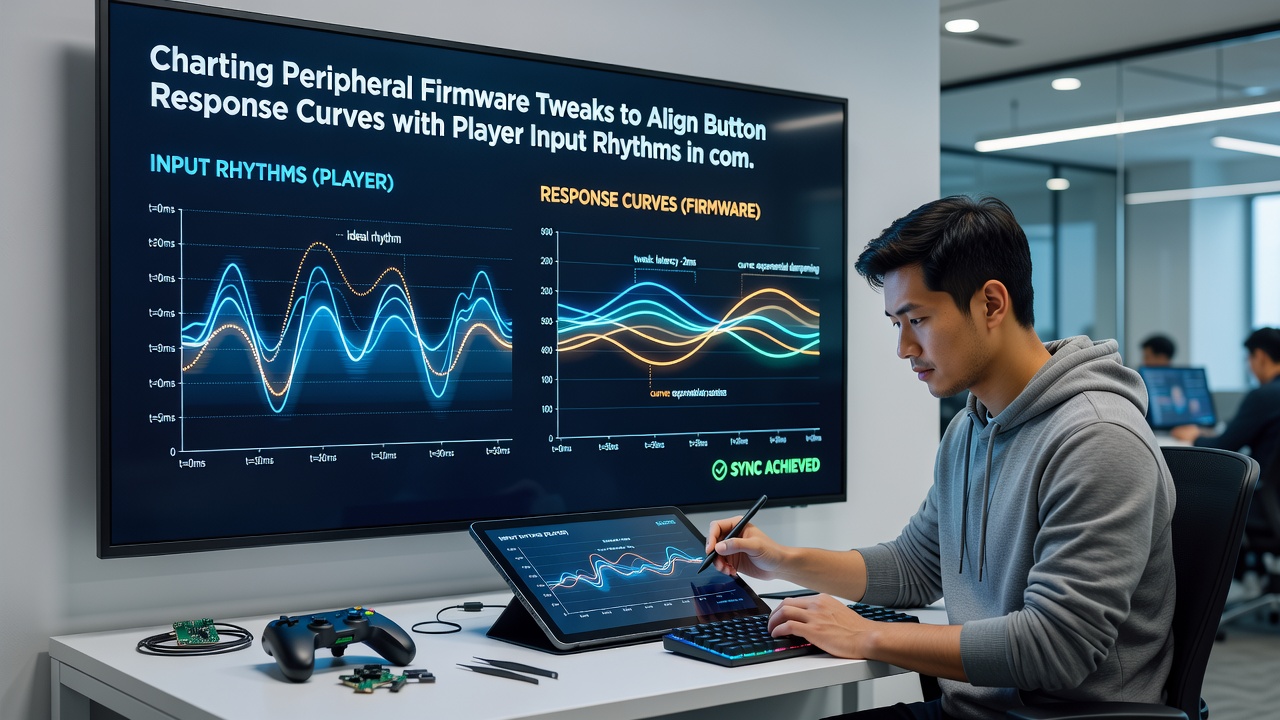
Calibration sessions often incorporate software that visualizes live input timing against the modified curve, allowing immediate feedback on whether the adjustment matches the intended rhythm. Data collected during these sessions shows reduced variance in execution frames for moves that require precise chaining, and similar patterns appear across multiple device types when the firmware parameters are tuned consistently.
Applications in tournament environments
Events scheduled for September 2026 have prompted organizers to review hardware compliance rules that address firmware modifications, ensuring that adjustments remain within bounds that preserve fair play across all entrants. Reports from prior competitions indicate that players who apply rhythm-aligned tweaks report more consistent performance in extended sets, though verification processes now include checksum checks on loaded firmware to prevent unauthorized alterations. Industry groups such as the Entertainment Software Association have published guidelines on input device standards that cover response latency expectations, and these documents influence how competitors document their peripheral setups.
Measurement and validation methods
Validation relies on high-speed capture equipment that records both physical button actuation and the resulting game state changes, producing datasets that quantify the alignment between firmware curve and player rhythm. European research initiatives through organizations like the European Games Developer Federation have contributed comparative studies across regional player bases, highlighting how cultural differences in play style affect optimal curve shapes. Those conducting the tests emphasize repeated trials under match-like pressure to confirm that tweaks hold up when input sequences accelerate during critical moments.
Conclusion
Peripheral firmware adjustments continue to evolve as competitors seek tighter synchronization between hardware behavior and personal input rhythms in platform battlers. Ongoing documentation of these modifications supports broader understanding of how small code-level changes translate into measurable differences during live play, and future events will likely refine the standards that govern acceptable practices in this area.